
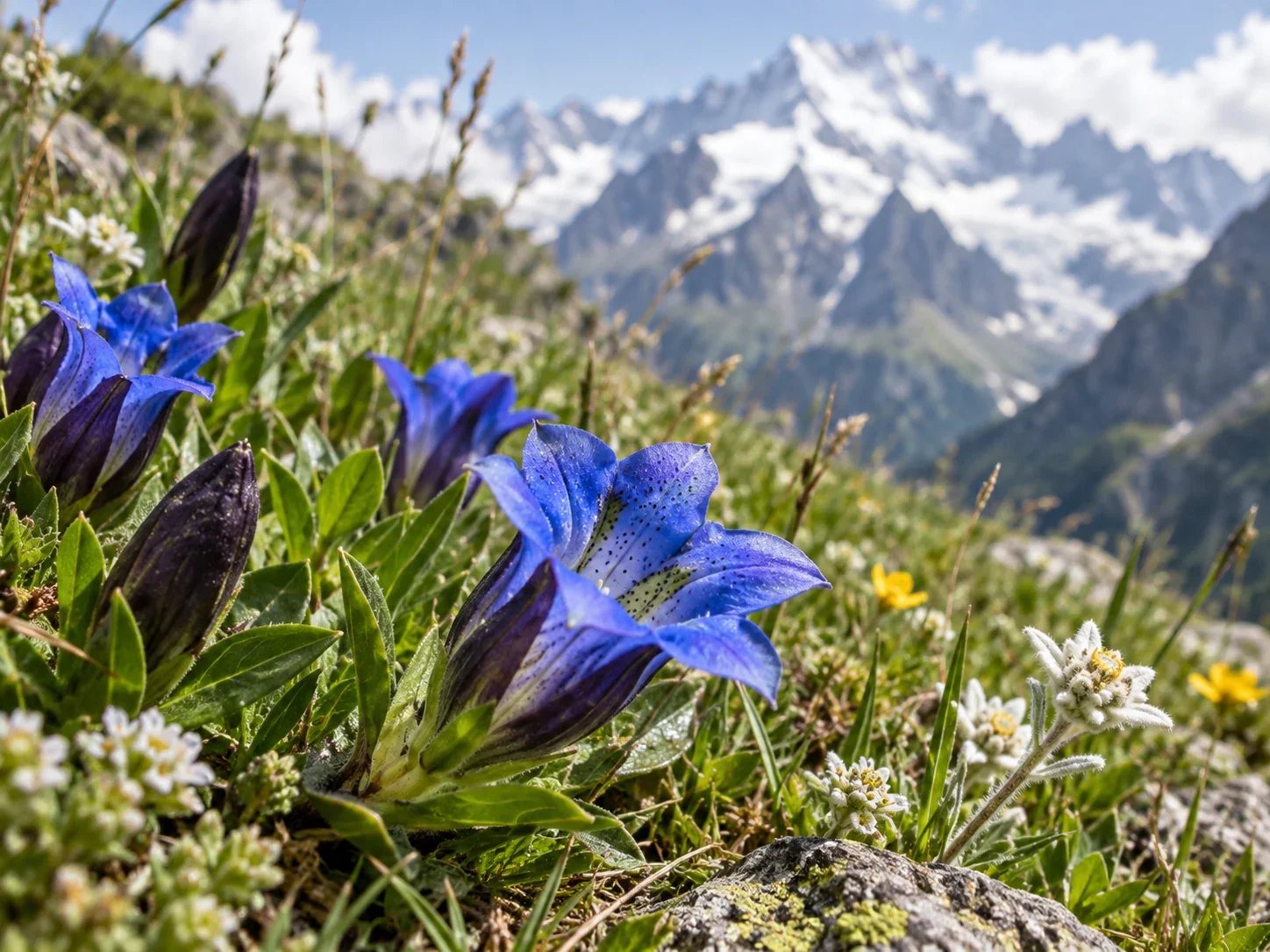
Flowers & plants
Look at the whole plant: leaves, stem, flower shape and habitat. A photograph can help you ask a better question later. Leave plants in place and avoid trampling around them.
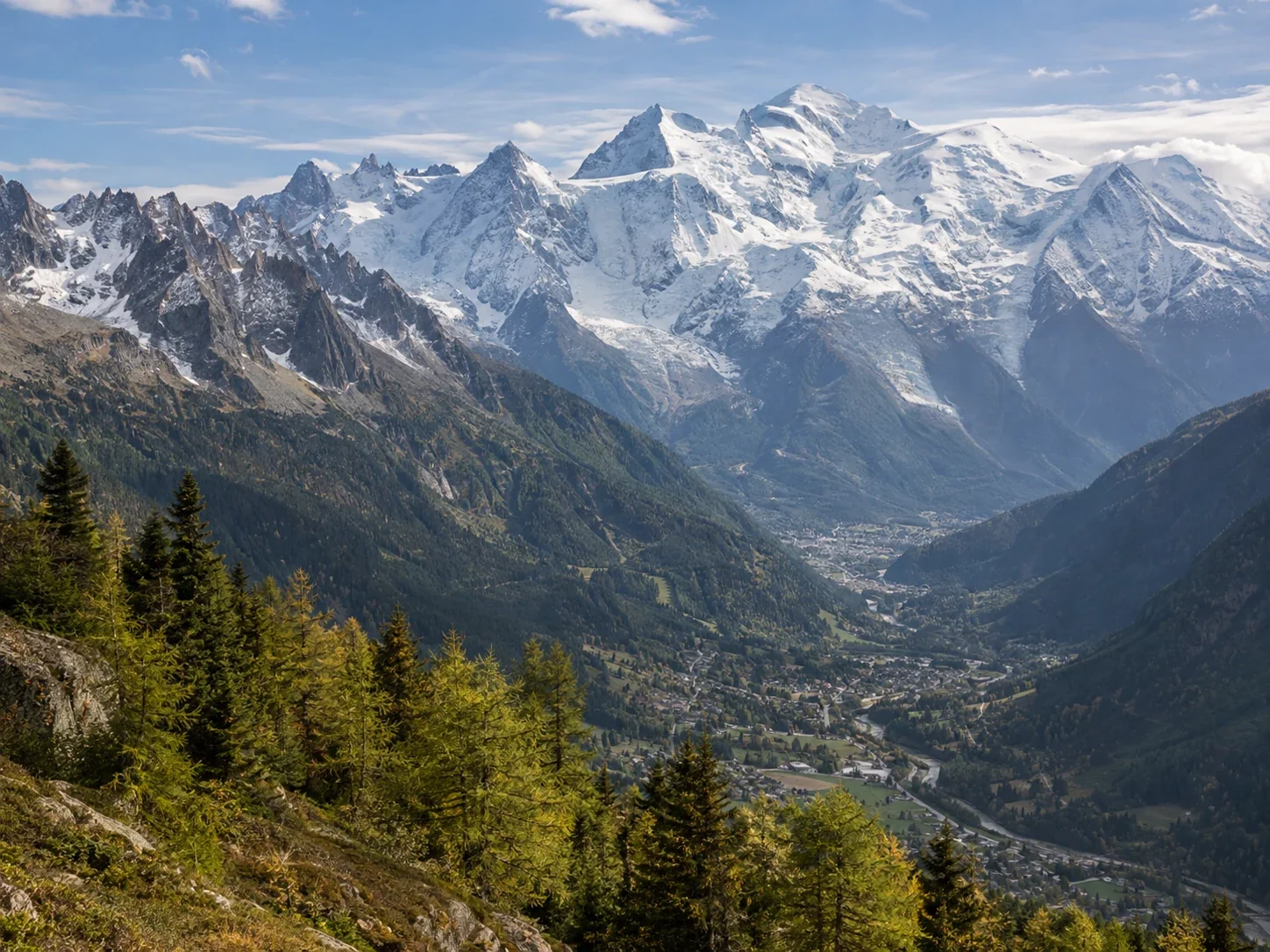
Mountain knowledge
A mountain day becomes richer when you notice what shapes it: the slope, the season, the living landscape and the people who use it. Start with these practical ways of looking.
For curious adults & children
Find six Alpine animals and flowers. Follow a hint, uncover a surprising fact and learn how to give nature space.
The living landscape
Altitude, slope direction and terrain create different conditions over short distances. Notice where woodland gives way to open ground, where snow lingers and where plants find shelter. CREA Mont-Blanc studies how these mountain ecosystems respond to a changing climate.
Look at the whole plant: leaves, stem, flower shape and habitat. A photograph can help you ask a better question later. Leave plants in place and avoid trampling around them.
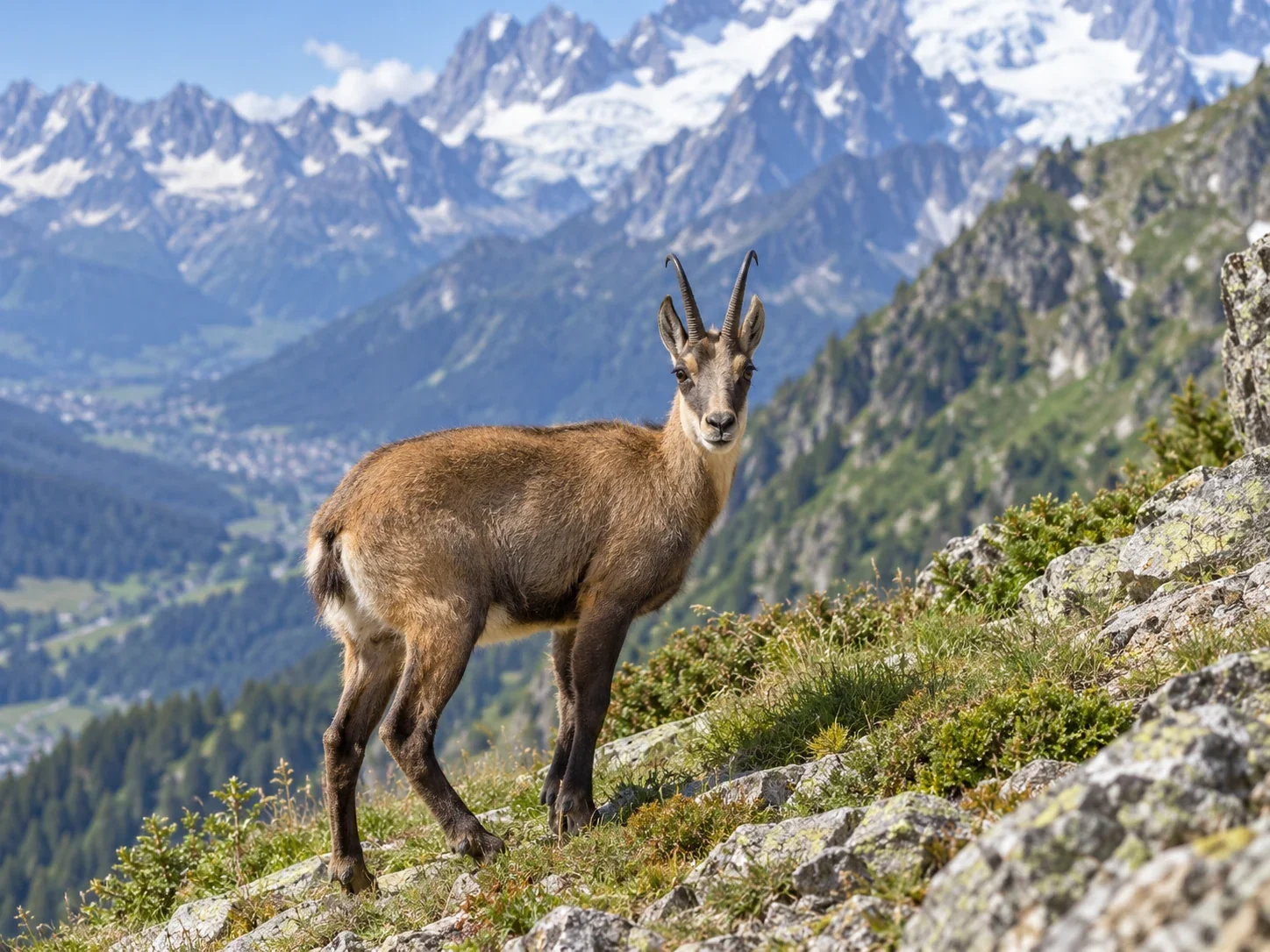
Watch from a distance and let the animal decide how long an encounter lasts. Keep quiet, avoid feeding wildlife and do not move closer for a photograph.
Compare the woodland at different heights and on different slopes. Look at leaf shape, bark and the changing canopy; a single feature is rarely enough for a confident identification.
The images illustrate these subjects; they are AI-generated and should not be used as species-identification references. Use a reliable field guide or a knowledgeable local professional.
The changing mountains
Look for the shape of the valley, exposed rock and deposits left by moving ice. A viewpoint is a place to observe the landscape; it does not establish that the terrain beyond is accessible or suitable.
The calendar alone does not describe a route. Early-season snow can remain on walking terrain, while weather and access change through the season. Check current local information before committing to a plan.
The direction a slope faces influences how it receives sunlight. Notice the contrast between open sunny ground and shaded hollows. Ask how those differences affect the day you are considering.
Food, water & mountain culture
Regional cheeses, bread and shared meals are another way to get to know the Alps. Taste of the Alps introduces familiar food traditions and ideas for making lunch part of a mountain day.
It also looks at mountain water: the difference between an officially designated drinking-water source and untreated springs, streams or meltwater.
People & place
Trails pass through places used for farming, conservation, recreation and daily life. Read local signs, respect closures and ask before assuming that access, dogs or an overnight stay are permitted.
For a refuge stop, confirm opening, reservation requirements and what is available directly with the refuge. Include the time needed for the descent and any last transport when discussing the day with your leader.
Start a conversation
Plants, wildlife, a first Alpine walk or a particular landscape. Mention your interests when asking for a leader introduction.
Enquire with Kristian