
Explore the Alps.
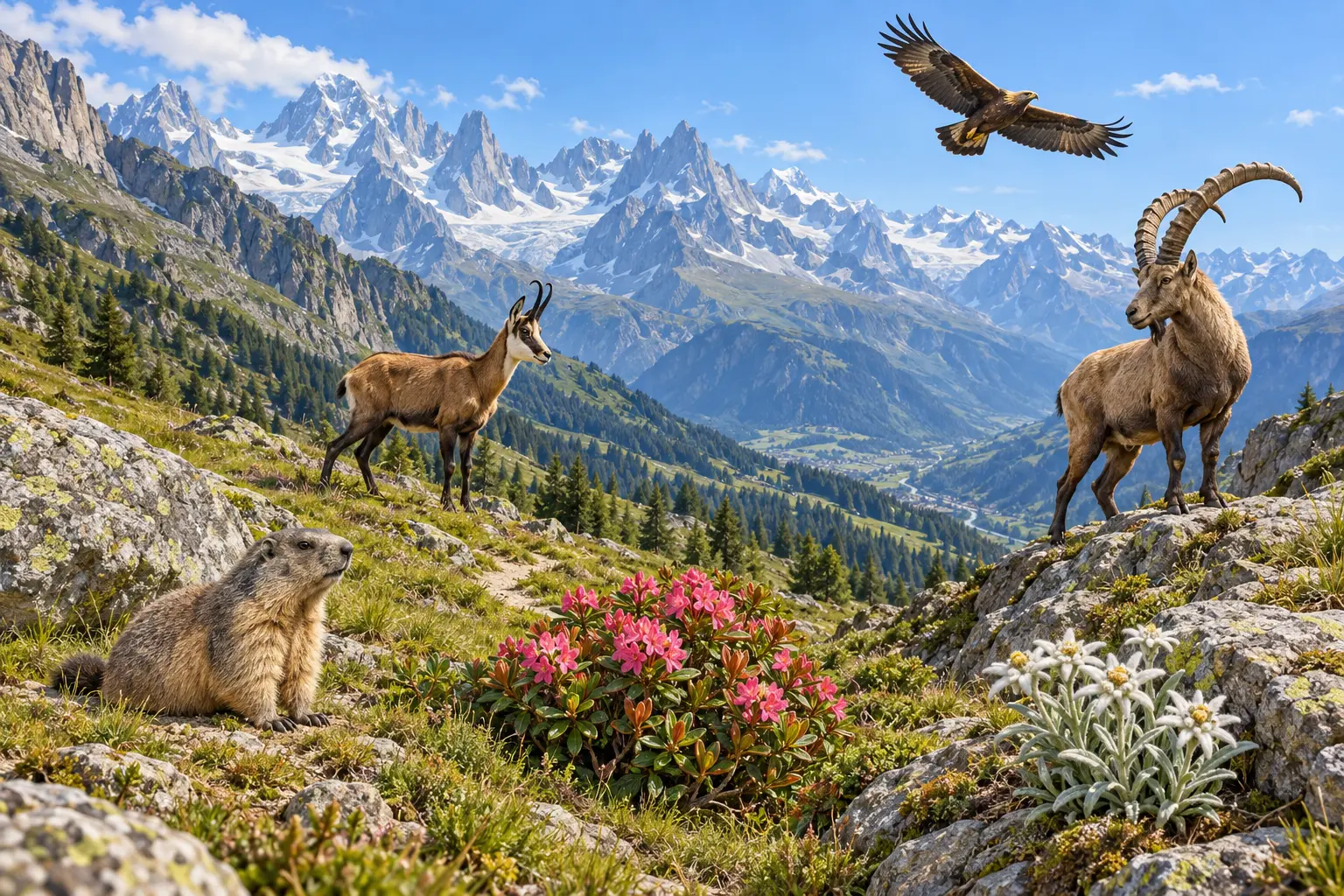
Spot six animals and flowers together. Tap a discovery to find out more.
Keep discovering
A little Alpine field guide.
Open any name to read the facts without searching the picture. Expert links include real photographs and more detail.
Alpine ibexAnimal
Bouquetin des Alpes · Capra ibex
- Recognise it
- Look for a sturdy body and backward-curving horns. An adult male has especially large, ridged horns; females have shorter ones.
- Did you know?
- Its flexible, grippy hooves help it balance on steep rock. A large male’s horns can reach a metre in length.
- Give nature space
- Enjoy the view from a distance. Let it rest or feed without moving closer, even if it seems calm.
ChamoisAnimal
Chamois · Rupicapra rupicapra
- Recognise it
- The short, slender horns curve into hooks at the tips. Compare them with the much larger horns of the male ibex.
- Did you know?
- Both males and females grow horns. In winter, a chamois grows a thicker, much darker coat.
- Give nature space
- Keep your distance and stay quiet. Being disturbed uses energy, which is especially precious in winter.
Alpine marmotAnimal
Marmotte des Alpes · Marmota marmota
- Recognise it
- Look for a stocky brown-grey body, small ears and short, strong legs. Marmots live in burrows in mountain grassland.
- Did you know?
- That sharp whistle is an alarm call. Marmots also hibernate underground through the winter.
- Give nature space
- Watch quietly with binoculars. Never feed a marmot or wait right outside its burrow.
Golden eagleAnimal
Aigle royal · Aquila chrysaetos
- Recognise it
- Look for a large, dark bird with broad wings. A silhouette is a useful clue, but is not enough for a certain identification.
- Did you know?
- An eagle can circle upwards on moving air, gaining height without constantly flapping its wings.
- Give nature space
- Watch from a distance with binoculars. Give birds space and respect any wildlife protection signs.
EdelweissFlower
Edelweiss · Leontopodium nivale subsp. alpinum
- Recognise it
- Find a woolly white star surrounding small flower heads in the centre. Look closely at the whole plant when using a field guide.
- Did you know?
- The white star is made of modified leaves called bracts. The tiny true flowers are clustered in the middle.
- Give nature space
- Leave the flowers growing. Photograph from the path and avoid trampling the plants around them.
AlpenroseFlower
Rhododendron ferrugineux · Rhododendron ferrugineum
- Recognise it
- Look for clusters of bright pink flowers on a low shrub. Its leaves are dark and shiny above, with a rusty underside.
- Did you know?
- Its flexible branches can bend beneath a blanket of snow without breaking. The flowers attract pollinators in summer.
- Give nature space
- Leave flowers for visiting insects. Keep to the path and enjoy the shrub without picking or breaking branches.
In the real mountains: watch quietly, never feed wildlife, leave flowers growing and follow local signs. Chamonix’s advice for respecting wildlife ↗
Start a conversation
Make room for a little curiosity.
Interested in wildlife, flowers or a gentle family mountain day? Tell Kristian what you would enjoy. He can help with a free introduction to an independent leader.
Ask about a mountain day